President-chaired national water committee formed to tackle water crisis

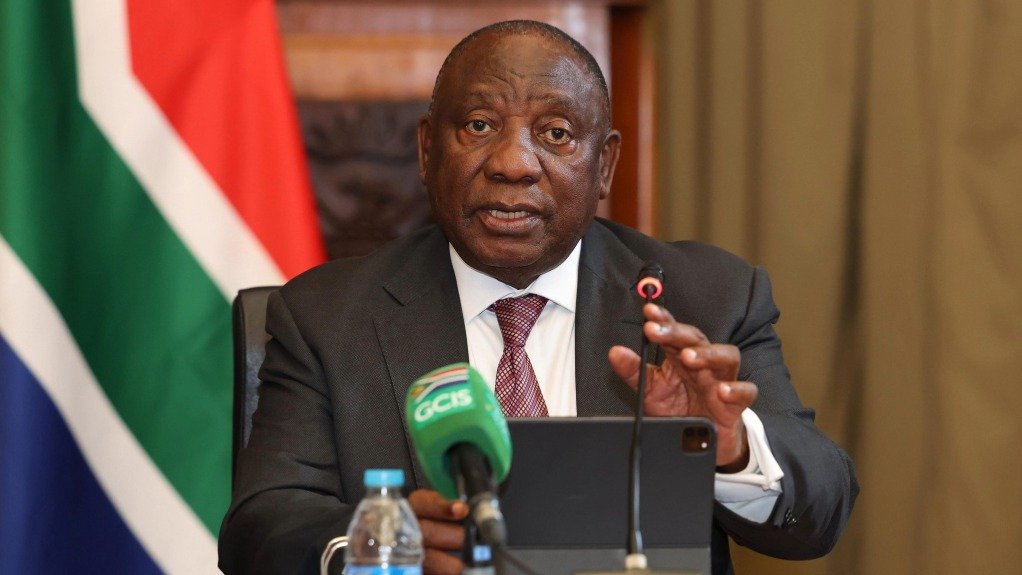


Government is establishing a National Water Crisis Committee, chaired by President Cyril Ramaphosa, to tackle South Africa’s prolonged water crisis.
While longer-term reforms are under way, led by the Department of Water and Sanitation (DWS), there is a need, in the short term, to address the immediate crisis where water outages are currently being experienced.
“Water is now the single most important issue for many people in South Africa, from large cities like Johannesburg to smaller towns like Knysna and rural areas like Giyani,” Ramaphosa said during his 2026 State of the Nation Address (SoNA) on Thursday night.
He likened the approach of the new water committee to that of the National Energy Crisis Committee, established three years ago to enable a focused national response to the daily power cuts experienced across the county.
“We overcame what seemed like an insurmountable challenge by adopting a clear plan and delivering on it. Using the same approach, we will now elevate our response to the water crisis to a National Water Crisis Committee, which I will chair.”
This structure will bring together all existing efforts into a single coordinating body, and deploy technical experts and resources from national government to municipalities facing water challenges.
“It will ensure that action is taken swiftly and effectively to address the problem.”
This followed weeks-long water outages, and inadequate and unreliable access to basic water services in many suburbs across Gauteng, which triggered community protests earlier this week.
The South African Human Rights Commission on Thursday called for the water outages currently crippling South Africa to be declared a national disaster, as it believes that the water challenges have reached crisis proportions.
On Thursday, Ramaphosa deployed Water and Sanitation Minister Pemmy Majodina, Deputy Minister David Mahlobo and Cooperative Governance and Traditional Affairs Minister Velenkosini Hlabisa to attend to the water shortage challenge and engage with communities on how government intends to immediately deal with the challenges, instead of attending the SoNA.
“They informed me that the pipes that had been damaged are being repaired and the reservoirs are filling up again. Poor planning and inadequate maintenance of water systems by many municipalities are the main cause of the problems we are going through now and are the reason that taps often run dry,” he said, noting that the real challenge lay not in the availability of water, but in getting water to people’s taps.
“There is no silver bullet to address this challenge, which has its roots in systemic failures and many years of neglecting infrastructure," Ramaphosa noted, adding that water outages were a symptom of a local government system that was not working.
A far-reaching overhaul is now under way by DWS and other stakeholders to address the root causes of dysfunction in many municipalities.
The reforms include the Water Services Amendment Bill, which will enable the DWS to hold water service providers accountable for their performance and withdraw their licence if they fail to deliver.
“If a municipality is not willing or able to provide a service to its residents, it must be done by another structure that can.”
Government has already laid criminal charges against 56 municipalities that have failed to meet their obligations, with plans to lay charges against municipal managers in their personal capacity for violating the National Water Act.
To address the critical challenge of many metropolitans, cities and towns using water revenue for other purposes, with very little invested in upgrading and maintaining water infrastructure, government has introduced a new R54-billion incentive for metropolitans to reform their water, sanitation and electricity services.
This will ensure that revenues from water use are put straight back into fixing pipes, reservoirs and pumping stations.
Within the next few months, government will also finalise a revised White Paper on Local Government, which will provide solutions for the effective functioning of the local government system.
“The White Paper will reimagine the way that local government works. The current system is too complex and fragmented, expecting even small and weak municipalities to take on many responsibilities,” he commented.
“We will ensure that senior officials in local government have the required qualifications and are appointed through an independent process free from political interference.
“Where municipalities fail, we will strengthen the ability of national government to intervene more quickly and to direct corrective measures in the interests of serving our people better.”
While the reforms were under way, Ramaphosa assured that the work of the Presidential Working Groups in eThekwini and Johannesburg would continue to implement targeted support to improve the delivery of basic services.
“While we have made progress in stabilising eThekwini, which has led to investor confidence returning, there is much more that needs to be done in Johannesburg to deal with collapsing infrastructure, financial mismanagement and electricity and water interruptions.”
In the longer term, to ensure water security, new dams are being built and existing infrastructure is being upgraded, with government committing more than R156-billion in public funding for water and sanitation infrastructure alone over the next three years.
The construction of the Lesotho Highlands Water Project and other large-scale projects, such as the Ntabelanga dam, part of the Mzimvubu Water Project in the Eastern Cape, is advancing.
The DWS is also in the final stages of establishing a National Water Resource Infrastructure Agency to effectively manage the country’s water infrastructure and to mobilise funding for water infrastructure.
Article Enquiry
Email Article
Save Article
Feedback
To advertise email advertising@creamermedia.co.za or click here
Research Reports
Projects
Latest Multimedia
Latest News
Showroom
Virtual Gas Network supplies compressed natural gas via a virtual gas distribution network.
VISIT SHOWROOM
Sweet-Orr, established in 1871, is a global leader in superior protective workwear, known for quality, innovation, and performance.
VISIT SHOWROOM
Press Office
Announcements
What's On
Subscribe to improve your user experience...
Option 1 (equivalent of R125 a month):
Receive a weekly copy of Creamer Media's Engineering News & Mining Weekly magazine
(print copy for those in South Africa and e-magazine for those outside of South Africa)
Receive daily email newsletters
Access to full search results
Access archive of magazine back copies
Access to Projects in Progress
Access to ONE Research Report of your choice in PDF format
Option 2 (equivalent of R375 a month):
All benefits from Option 1
PLUS
Access to Creamer Media's Research Channel Africa for ALL Research Reports, in PDF format, on various industrial and mining sectors
including Electricity; Water; Energy Transition; Hydrogen; Roads, Rail and Ports; Coal; Gold; Platinum; Battery Metals; etc.
Already a subscriber?
Forgotten your password?
Receive weekly copy of Creamer Media's Engineering News & Mining Weekly magazine (print copy for those in South Africa and e-magazine for those outside of South Africa)
➕
Recieve daily email newsletters
➕
Access to full search results
➕
Access archive of magazine back copies
➕
Access to Projects in Progress
➕
Access to ONE Research Report of your choice in PDF format
RESEARCH CHANNEL AFRICA
R4500 (equivalent of R375 a month)
SUBSCRIBEAll benefits from Option 1
➕
Access to Creamer Media's Research Channel Africa for ALL Research Reports on various industrial and mining sectors, in PDF format, including on:
Electricity
➕
Water
➕
Energy Transition
➕
Hydrogen
➕
Roads, Rail and Ports
➕
Coal
➕
Gold
➕
Platinum
➕
Battery Metals
➕
etc.
Receive all benefits from Option 1 or Option 2 delivered to numerous people at your company
➕
Multiple User names and Passwords for simultaneous log-ins
➕
Intranet integration access to all in your organisation